Hennaverse → modern
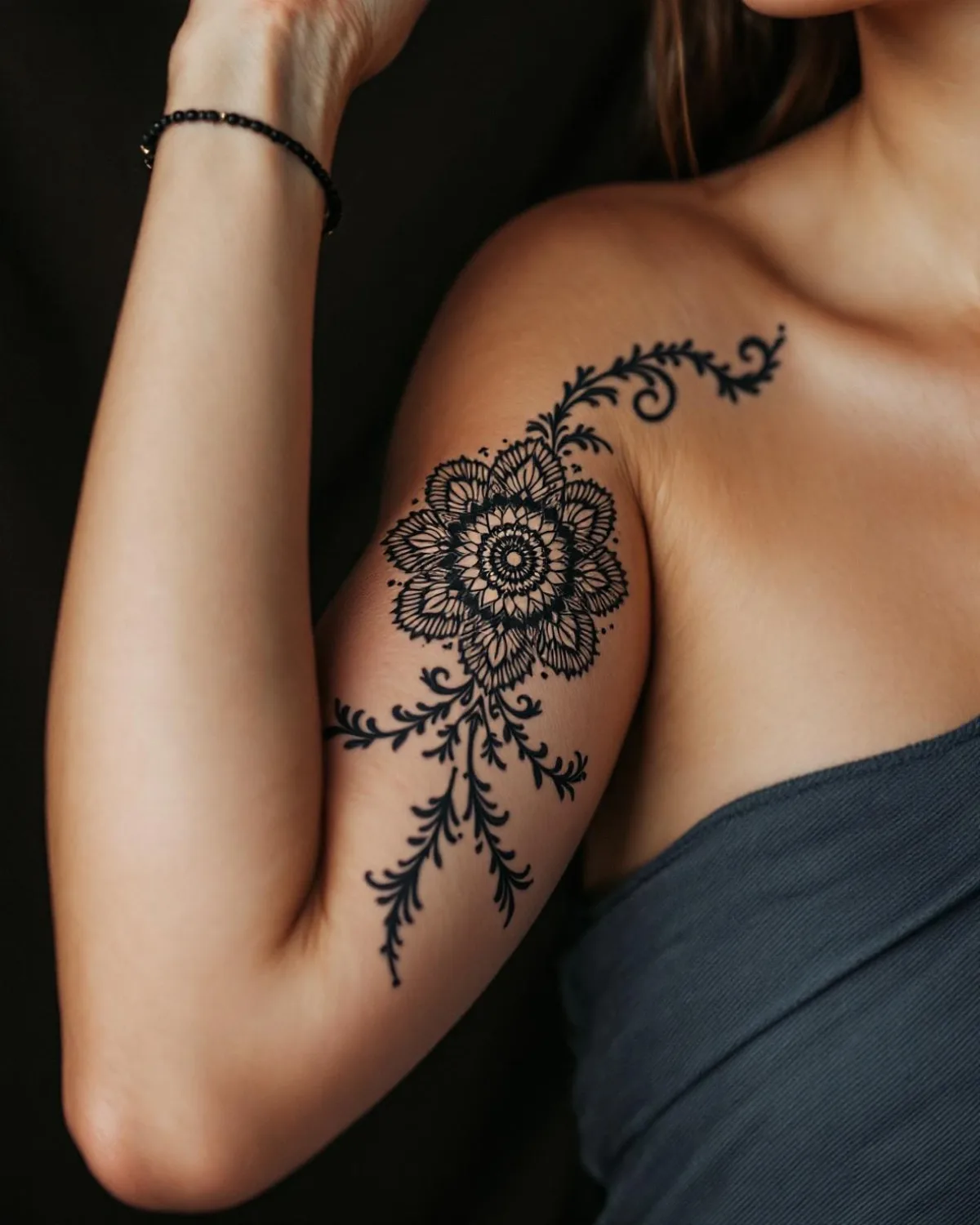
Ornamental tattoo draws from henna traditions, sacred geometry, and jewelry design. While henna has been applied to skin for millennia, ornamental tattoo as a tattooed form emerged in the 2010s as artists (particularly those trained in body art and design) began translating the intricate, wearable-jewelry aesthetic into permanent ink. The style was further refined by designers influenced by Indian mehndi (henna), Islamic geometric decoration, and Victorian jewelry design. Ornamental tattoo is intimate body cartography—designs map the body as a canvas for adornment, treating the skin as precious material. It challenges the idea that tattoos must be "statement" pieces; instead, ornamental tattoo is quiet luxury, personal jewelry that cannot be removed.
Lace, jewelry, mandala, body-mapping
Ornamental tattoo combines intricate linework, mandala geometry, and body-contour awareness. Designs often wrap around joints, follow the collarbone, or frame the décolletage—treating anatomy as part of the composition. Lace patterns, jewelry motifs, and geometric mandalas are common foundations. Black is standard, though some ornamental work incorporates fine gold or copper accents. The effect is sophisticated and timeless—part of the body's permanent adornment. Ornamental work requires artists trained in precise linework and body mapping; designs must account for how the body moves and ages.
Open Tattoo Genie. Type one of these.
Ornamental lace mandala wrapping around the collarbone and shoulders
Delicate ornamental jewelry design framing the sternum, all linework
Ornamental sleeve: interlocking mandalas and lace patterns, body-mapping
Ornamental chest piece: geometric flowers and jewelry motifs, high detail
Ornamental anklet: intricate lace pattern encircling the ankle
Ornamental back neck design: sacred geometry and body-contoured linework
Real designs from the community
Quiet answers.
Is ornamental tattoo more detailed than other styles?
Ornamental designs are densely detailed with intricate linework, but the detail serves the design—no wasted marks. The level of detail is comparable to geometric work, but the aesthetic is more decorative and body-conscious.
How does ornamental tattoo work on different body shapes?
Good ornamental design accounts for body anatomy. A mandala on the chest wraps symmetrically; a neck piece follows the collarbone. Discuss your body shape and movement with your artist—this affects how the design is mapped.
Can I customize an ornamental design?
Absolutely. Many ornamental artists excel at custom mandalas, lace patterns, or jewelry designs. Bring reference images and be clear about placement and size. Custom work often yields the best results.
How does ornamental age compared to other styles?
Ornamental ages beautifully because the intricate linework remains readable even as lines soften slightly. The complexity gives it visual depth. Well-executed ornamental work holds up excellently for 20+ years.
Is ornamental tattoo good for first-timers?
It depends on size and placement. Small ornamental pieces (ankle, wrist) can be quick sessions. Larger designs (full chest, back) require longer, more intensive work. Discuss session expectations with your artist.