Sacred geometry → contemporary
Geometric tattoo draws from sacred geometry traditions spanning cultures: Buddhist and Hindu mandalas, Islamic geometric patterns, Celtic knots, and Native American designs. These patterns emerged from spiritual practice—the belief that certain proportions and symmetries reflect universal truth. In modern tattooing, geometric design exploded in the 1980s and 1990s through artists experimenting with compass-built precision. The aesthetic gained momentum as a counterpoint to organic naturalism—a meditation on perfection through constraint. Sacred geometry tattoo is both mathematical and spiritual: it uses the Fibonacci sequence, the golden ratio, and protective geometric symbols. Modern geometric tattoo spans from tiny geometric animals to full-body mandala work.
Compass-built shapes, dotwork, mandala roots
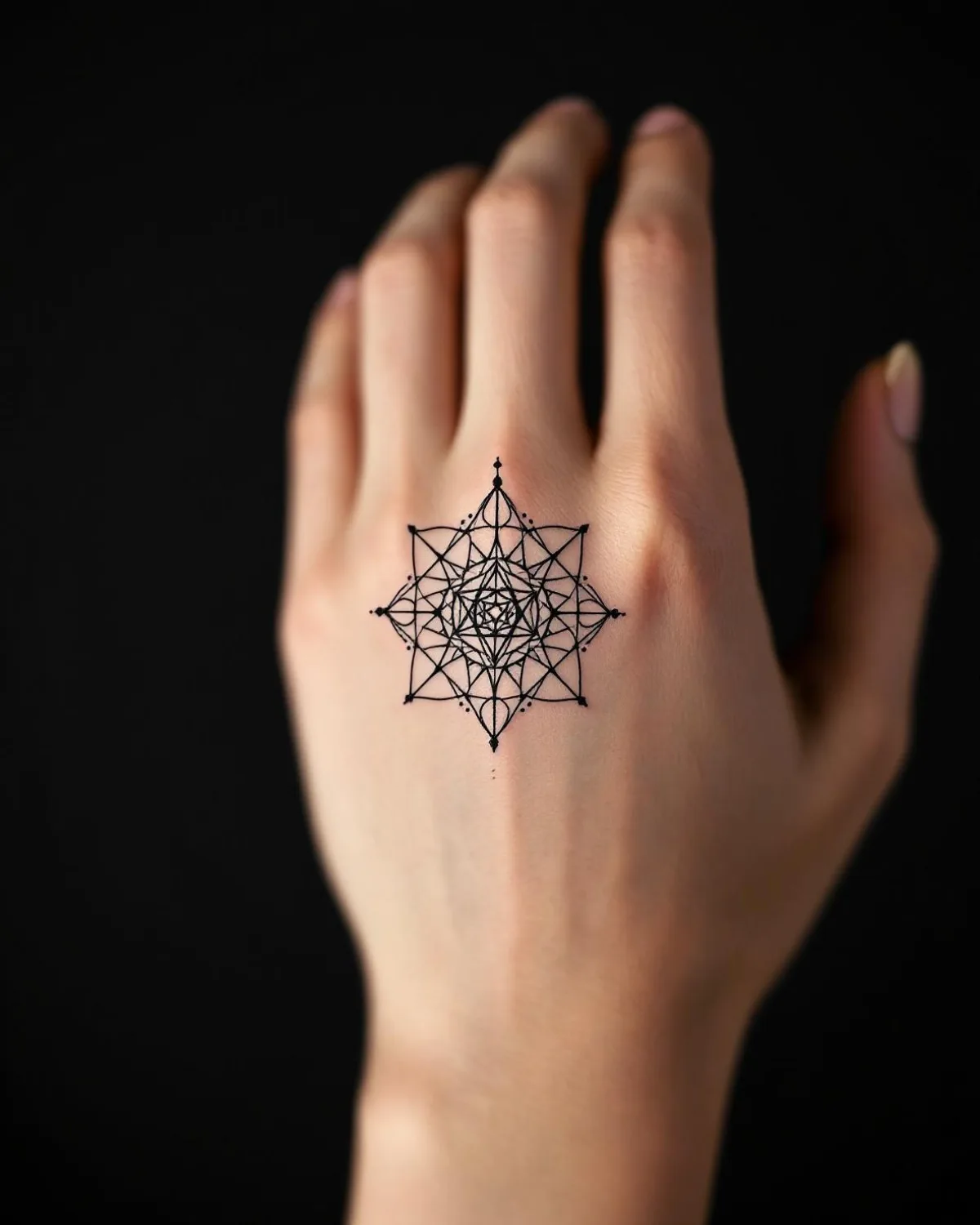
Geometric tattoos are built from perfect forms: circles, triangles, hexagons, and mandalas. Line weight is typically precise and consistent, often created with ruler guides or digital planning. The compositions use symmetry (bilateral or radial) to create visual harmony. Dotwork shading (thousands of tiny dots building gradation) is common in geometric mandalas. Black is standard, though some geometric work incorporates subtle color. The effect is meditative—the viewer's eye is drawn to the center and follows geometric logic. No accident, no organic wobble; every line has intention.
Open Tattoo Genie. Type one of these.
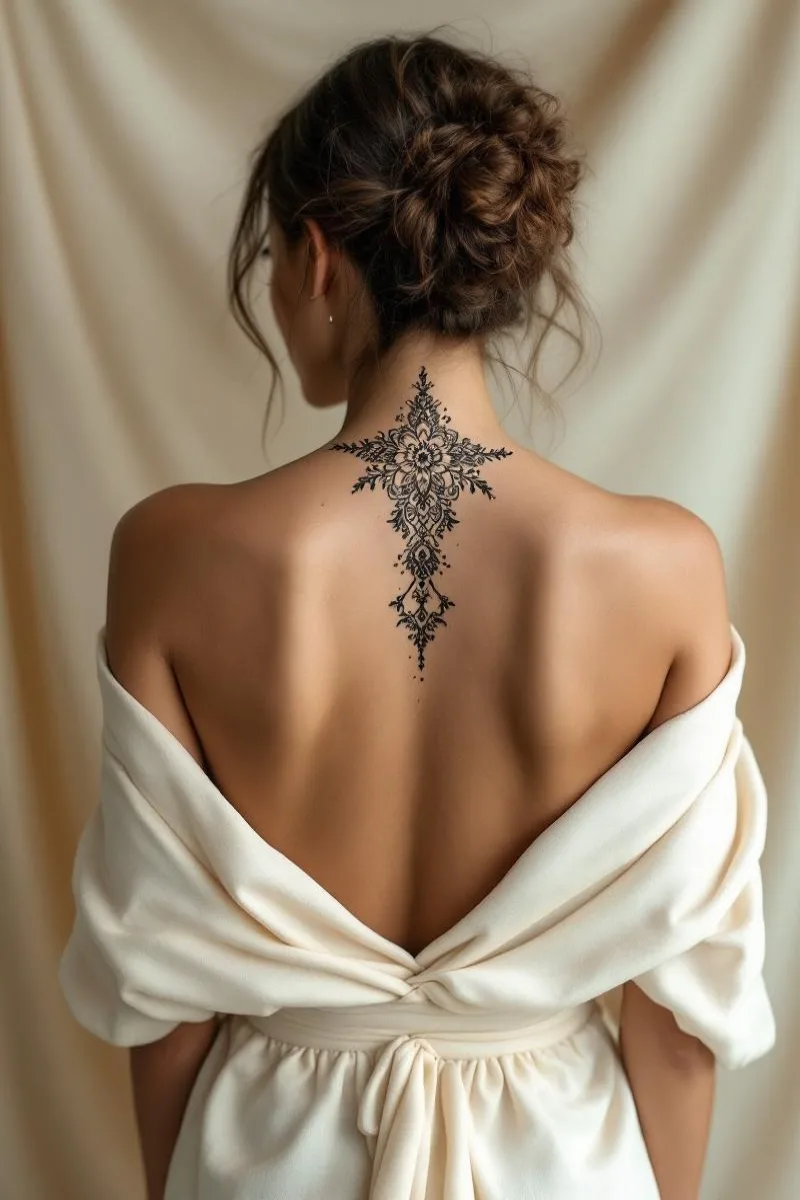
Geometric mandala with sacred geometry proportions, black dotwork, on the back
Minimalist geometric animal: a fox or wolf made entirely of triangles and lines
Full geometric sleeve: interlocking hexagons and sacred proportion patterns
Small geometric compass rose with precise angles and symmetrical detail
Geometric mandala with Flower of Life sacred symbol center
Geometric abstract: concentric circles and radiating geometric patterns
Real designs from the community
Quiet answers.
What is sacred geometry, and why does it matter in geometric tattoo?
Sacred geometry refers to proportions found in nature (Fibonacci sequence, golden ratio, etc.) believed to represent universal truth and harmony. In tattoo, these proportions create visually perfect, lasting designs. It's both mathematical and spiritual.
How precise is geometric tattoo work?
Precision is essential. Most geometric artists use rulers, calipers, or digital planning before applying ink. Hand-placed geometric work can deviate—look for artists experienced in compass-built and measured designs.
Can I get a geometric design custom-made?
Yes. Many geometric artists excel at custom mandalas or abstract designs tailored to your vision. Bring reference images and be clear about symmetry preferences (bilateral, radial, etc.).
How does dotwork shading in geometric tattoos age?
Dotwork ages gracefully when done well. Individual dots may blur slightly, but the overall pattern remains readable for decades. The density and precision of the original work determine longevity.
Is geometric tattoo suitable for all body placements?
Yes. Geometric works at any scale and any placement. Symmetrical designs often look best on flat, even surfaces (back, chest, full sleeve), but asymmetrical geometric patterns work anywhere.