Tribal roots, modernized 2000s
Blackwork draws lineage from Polynesian tribal tattooing, Borneo Iban patterns, and sacred geometry traditions. The modern revival began in the 2000s through artists like Thomas Hooper and Liam Sparkes, who elevated tribal and geometric traditions into a deliberate artistic statement. The style gained momentum as a counter-aesthetic to color-heavy work—a meditation on form, negative space, and the permanence of pure black ink. It became a global language for artists seeking power without decoration.
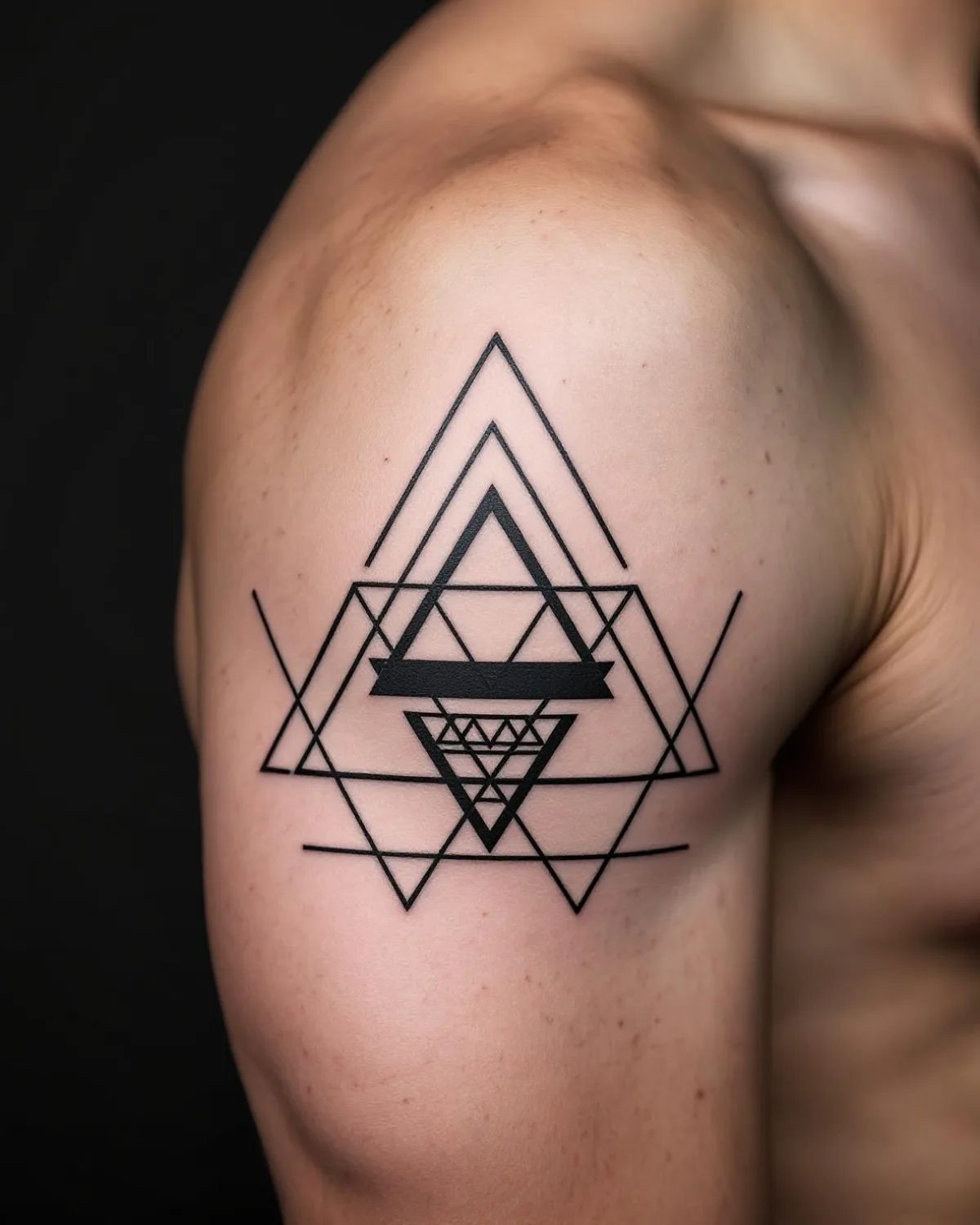
Solid black fills, geometric weight, high contrast
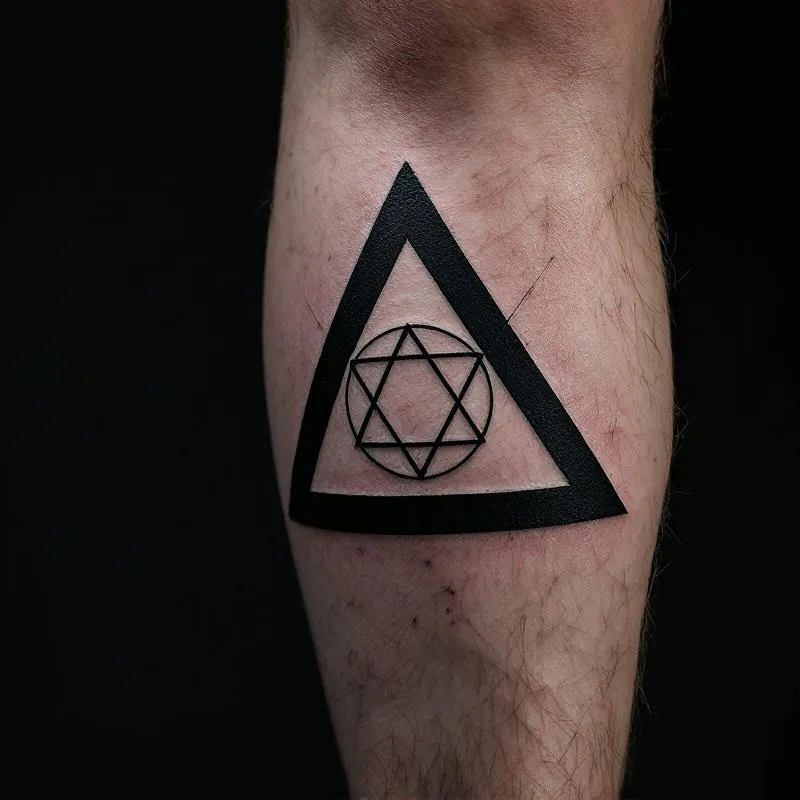
Blackwork employs 100% black ink with zero gray or color. The visual grammar relies on negative space, with designs often built from geometric building blocks: rectangles, circles, triangles, and mandalas. Line weight is typically 1.5–3mm for fills. The effect is stark, high-contrast, and timeless. Because there is no gradation, the style photographs well and ages with authority—blackwork pieces remain bold for 20+ years with minimal visible fading.
Open Tattoo Genie. Type one of these.
Large geometric mandala on my upper back, solid black fill
Abstract blackwork sleeve: interlocking shapes and tribal patterns
Blackwork band around my forearm with sacred geometry
Bold geometric lion head, heavy lines, high contrast
Minimalist blackwork moth or butterfly in geometric style
Full chest piece: complex mandala with geometric flow
Real designs from the community
Quiet answers.
Does blackwork fade to gray over time?
Blackwork ages as solid black indefinitely. However, if the skin itself fades (due to sun exposure), the piece may appear lighter. High-quality black ink and sun protection keep pieces looking fresh for 20+ years.
Can I add details or fine line to a blackwork design?
Some artists blend minimal fine line accents into blackwork (e.g., a single-needle detail on top of a blackwork base), but this shifts the aesthetic. True blackwork is purist—it's about the power of solid shape. Discuss it with your artist first.
How large should a blackwork tattoo be to look good?
Blackwork scales beautifully from 2 inches to full back pieces. The key is negative space—the blank skin is part of the design. Tight, cramped blackwork loses its visual impact. Give the artist room to breathe.
Is blackwork painful compared to other styles?
Blackwork involves heavy fill work, which means longer sessions and more ink deposition. Expect more discomfort than fine line but less than very detailed color work. Pain tolerance varies, but most clients prepare for medium-to-heavy sessions.
What happens if I want to cover a blackwork piece?
Blackwork is excellent cover-up material because the solid black base is effective at hiding older work. If you ever change your mind, a skilled artist can redesign around or on top of it.