Back
Spacious, visible when you turn around. The artist's largest stage.
Pain
4/10 average
Healing
3weeks (typical)
Visibility
Always private
What sits beneath
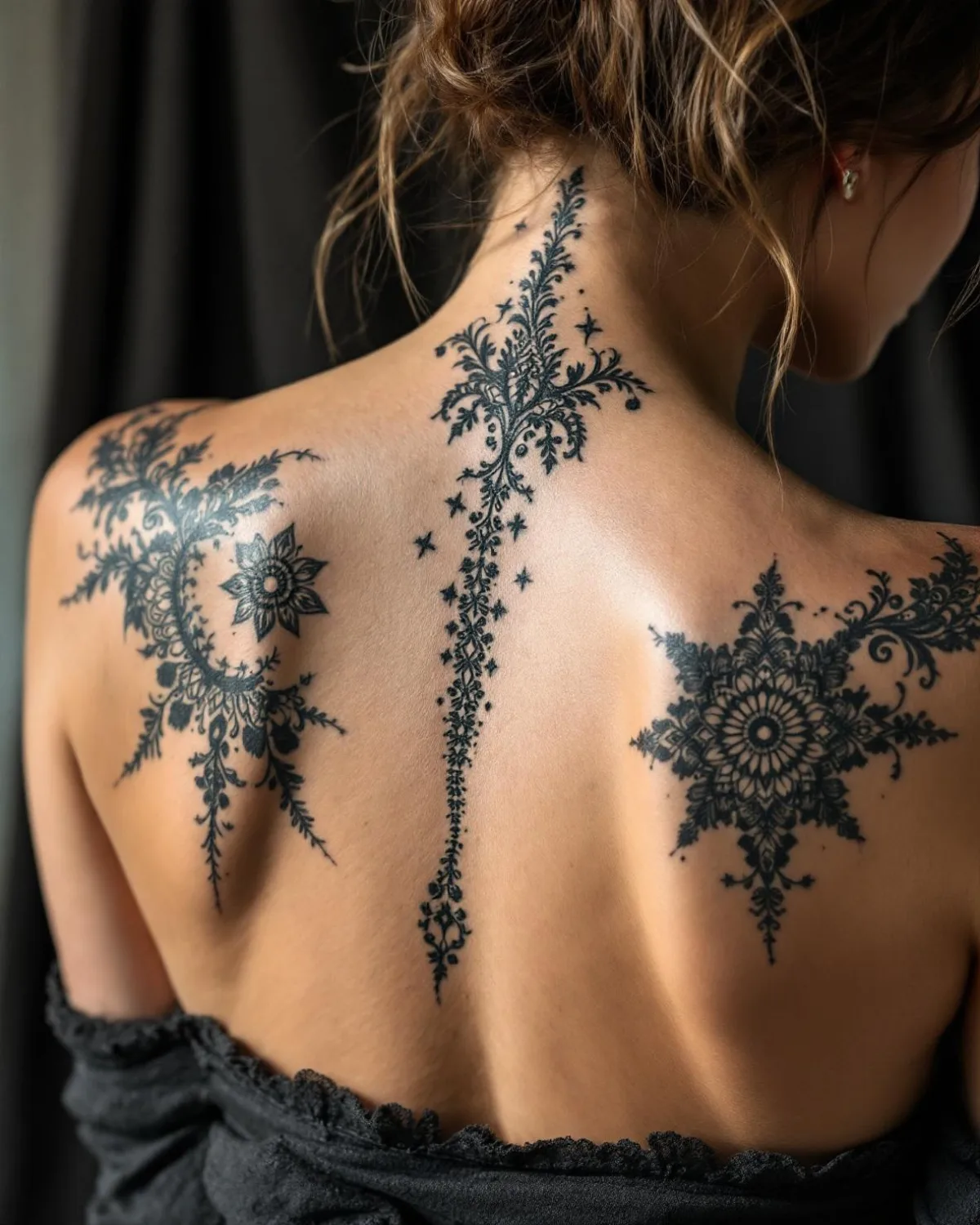
The back is a large, relatively flat surface spanning the trapezius, latissimus dorsi, and smaller shoulder and spine-adjacent muscles. Skin thickness is moderate to thick (1.5–2.5mm depending on location), with variable subcutaneous fat. The spine runs centrally; vertebrae are just beneath the surface. Lateral to the spine, the erector spinae muscles run vertically. The shoulder blades (scapulae) are prominent bony landmarks. Nerves (dorsal, ulnar, etc.) run throughout but are generally not in direct needle path for typical back piece work. The upper back has higher nerve density than the lower back. The back experiences constant movement—torso rotation, arm motion, and positional changes during sleep. This movement can slow healing.
What to expect
4/10
Low-to-moderate. The back has abundant muscle and fat cushioning, which reduces pain. However, the upper back (traps, shoulders, shoulder blades) has higher nerve density than the lower back. Over the spine itself, pain is moderate-to-high due to bone proximity. The lower back, especially lateral to the spine, is relatively comfortable.
3w
Back healing is complicated by constant movement and pressure from clothing and sleeping position. Sitting and reclining press the back against chairs, couches, and beds—this reopens scabs if done too aggressively during the first week. Tight or rough clothing creates friction. Sleeping on your back is ideal for the first 2 weeks; side or stomach sleeping presses the healing tattoo against surfaces. Sweating from heat or exercise can irritate healing skin.
Always private
Back tattoos are hidden under most clothing—shirts, jackets, layers. Only visible with sleeveless shirts, backless dresses, or when shirtless. Like chest pieces, they are inherently private and intimate. Great for pieces with deeper meaning or aesthetic impact without professional visibility concerns.
Specific to this placement
Wear loose, soft clothing—avoid tight shirts or rough fabrics that create friction. Sleep on your back for the first 2 weeks; avoid side or stomach sleeping. If you must sit, use a pillow between your back and the chair or couch to reduce pressure. Avoid strenuous back exercises (rows, deadlifts) for 3–4 weeks. Sweating from heat or exercise can irritate healing skin, so avoid saunas and intense workouts during the first week. Keep the area clean and moisturized. Avoid leaning against surfaces (walls, car seats) unnecessarily.
This is general guidance. Follow your tattoo artist's specific instructions.
Quiet answers.
How visible is a back tattoo in everyday life?
Rarely visible in professional or casual settings where shirts are standard. Visible in swimwear, sleeveless shirts, or shirtless contexts. Back tattoos are naturally private, making them ideal for personal or symbolic designs.
Can I get a large back piece, like a full back tattoo?
Yes. Back tattoos scale beautifully from small pieces to large full-back designs. The space is generous. Full-back pieces typically require multiple sessions (3–5 sessions, 3–4 hours each) spread over months.
Is tattooing over the spine painful?
Yes, significantly. The spine has bone proximity and less fat cushioning. If you're planning a design that runs along the spine, discuss pain management and positioning with your artist beforehand.
How does a back tattoo look if I lose or gain weight?
Back tattoos handle weight changes better than chest or stomach pieces because the back doesn't stretch as dramatically. However, very large designs can distort if significant weight gain occurs. A skilled artist designs with some flexibility in mind.
What's the difference between upper back and lower back tattoos?
Upper back (traps, shoulders, shoulder blades) has higher pain due to nerve density. Lower back, especially lateral, is more comfortable. Upper back pieces are more visible in backless attire; lower back pieces are more protected. Design placement should consider both aesthetics and pain tolerance.