2010s — AI-augmented now
Surreal tattoo as a defined movement emerged in the 2010s as artists began applying Dalí-esque logic to tattooing: unexpected juxtapositions, scale shifts, and the dreamscape as tattoo subject. Artists like Thomas Eckel and Jessica Svartvit began mixing figuration with impossible geometry, creating designs where a face might become landscape, or a small object loom impossibly large. Surreal tattoo exploded with AI image generation, which excels at the bizarre and uncanny. Today, surreal is the perfect AI-adjacent style—the algorithm's strength in dreamlogic and scale-breaking aligns perfectly with tattoo surrealism's core aesthetic. A surreal tattoo asks: "What if the rules of physics didn't apply?"
Dreamlogic, scale shifts, double imagery
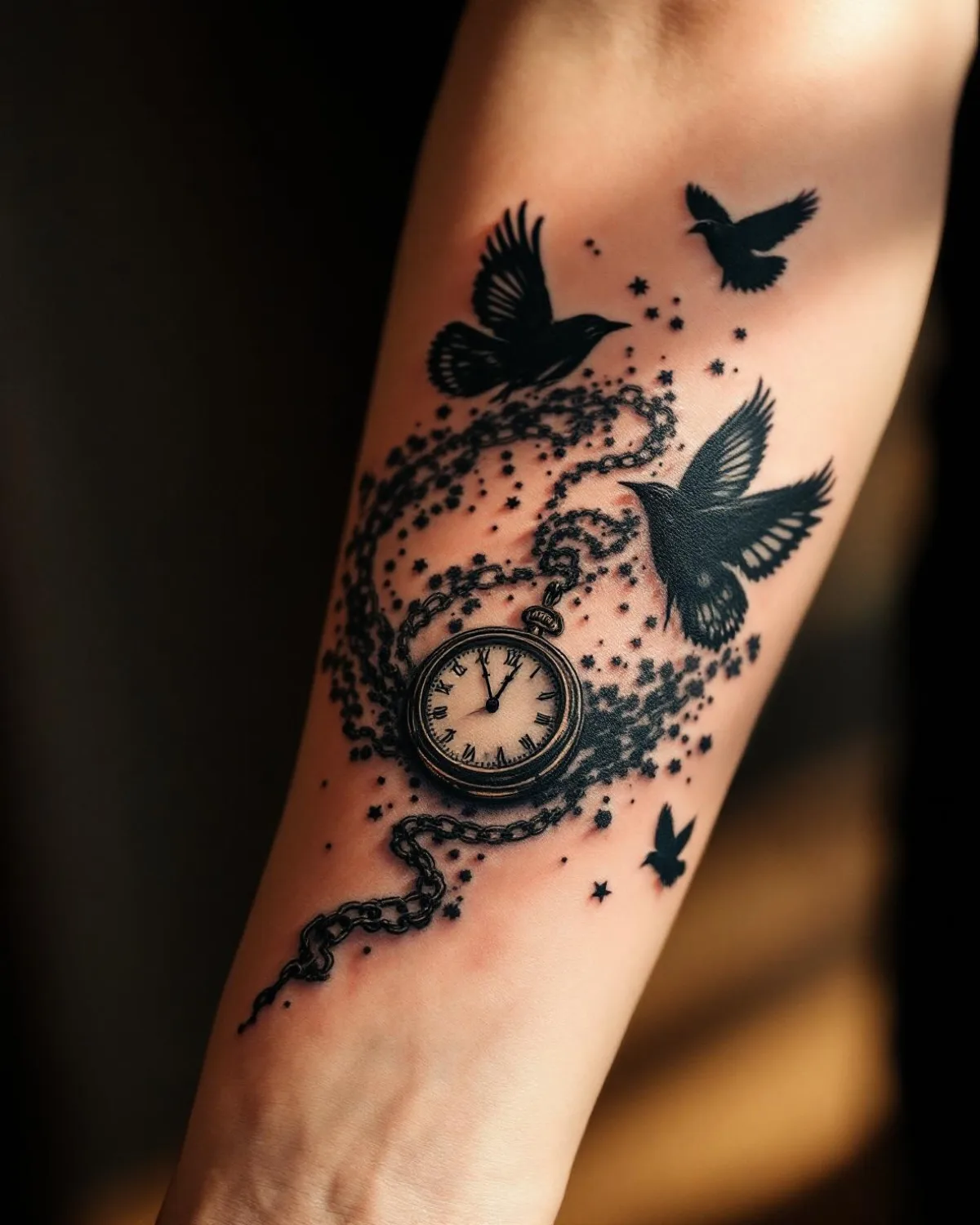
Surreal tattoo combines hyper-realistic detail (facial features, textures, anatomical precision) with impossible scenarios: a face emerging from water, a forest growing from a hand, a bird made of stars. The style often employs fine line or realism to anchor the "real" elements, then breaks those rules with scale shifts and dream-logic juxtapositions. Color can be present (often muted, painterly) or black and gray. The effect is unnerving and mesmerizing—the brain recognizes realism but cannot process the physics. Surreal work ages well because the strange beauty transcends trends.
Open Tattoo Genie. Type one of these.
Surreal tattoo: a woman's face dissolving into ocean waves and fish
Dreamlike landscape: mountains emerging from a sleeping person's profile
Surreal mandala growing from the center of an eye
A tree rooted in a floating stone, smaller than a thumb, impossible and beautiful
Surreal animal: a deer made of constellations and fine line botanicals
A key large enough to open the sky, floating above an impossible architecture
Real designs from the community
Quiet answers.
Will my surreal tattoo look dated as AI art evolves?
Surrealism as an artistic movement has endured since the 1920s—Dalí, Magritte, and others created timeless work. Your surreal tattoo is anchored in that tradition, not in AI trends. The beauty of the impossible transcends technology.
How do I describe a surreal idea to my tattoo artist?
Use reference images (art, photography, AI generations) to convey mood and logic. Describe the "what if" premise: "What if a face became a landscape?" or "What if this object was impossibly large?" Your artist will help translate the dream into achievable design.
Is surreal tattoo only for large pieces?
No. Surreal works at any scale—a small fish-faced leaf, a micro-landscape, an impossible geometric twist. The strangeness is what carries the design, not size.
Can I mix surreal with other styles?
Absolutely. Surreal pairs beautifully with fine line, blackwork, watercolor, or even traditional. The surreal *concept* is what matters; the execution technique can vary widely.
How detailed should my surreal piece be?
Detailed surreal work (photorealism + impossible scenario) ages beautifully and reads well even after decades. Simpler surreal concepts can also work well—it's about the idea, not the line count.