2010s movement
Watercolor tattoo as a defined style emerged in the early 2010s, most visibly through artists like Dani Queipo and Pedro Quillán who adapted traditional watercolor painting aesthetics directly into skin. The movement was a radical departure from the outlined traditions of tattooing—no bold black borders, no solid fills, just paint and water behavior. Watercolor tattoo gained viral momentum through Instagram, attracting artists trained in fine art who brought new technical sophistication. The style represents a broader shift in tattooing toward illusion and painterly expression. It's difficult technically (color bleeding is hard to control; registration is a constant challenge), but the result—a tattoo that looks like it was painted moments ago—has enduring appeal.
No outline, painterly bleed, splash artifacts
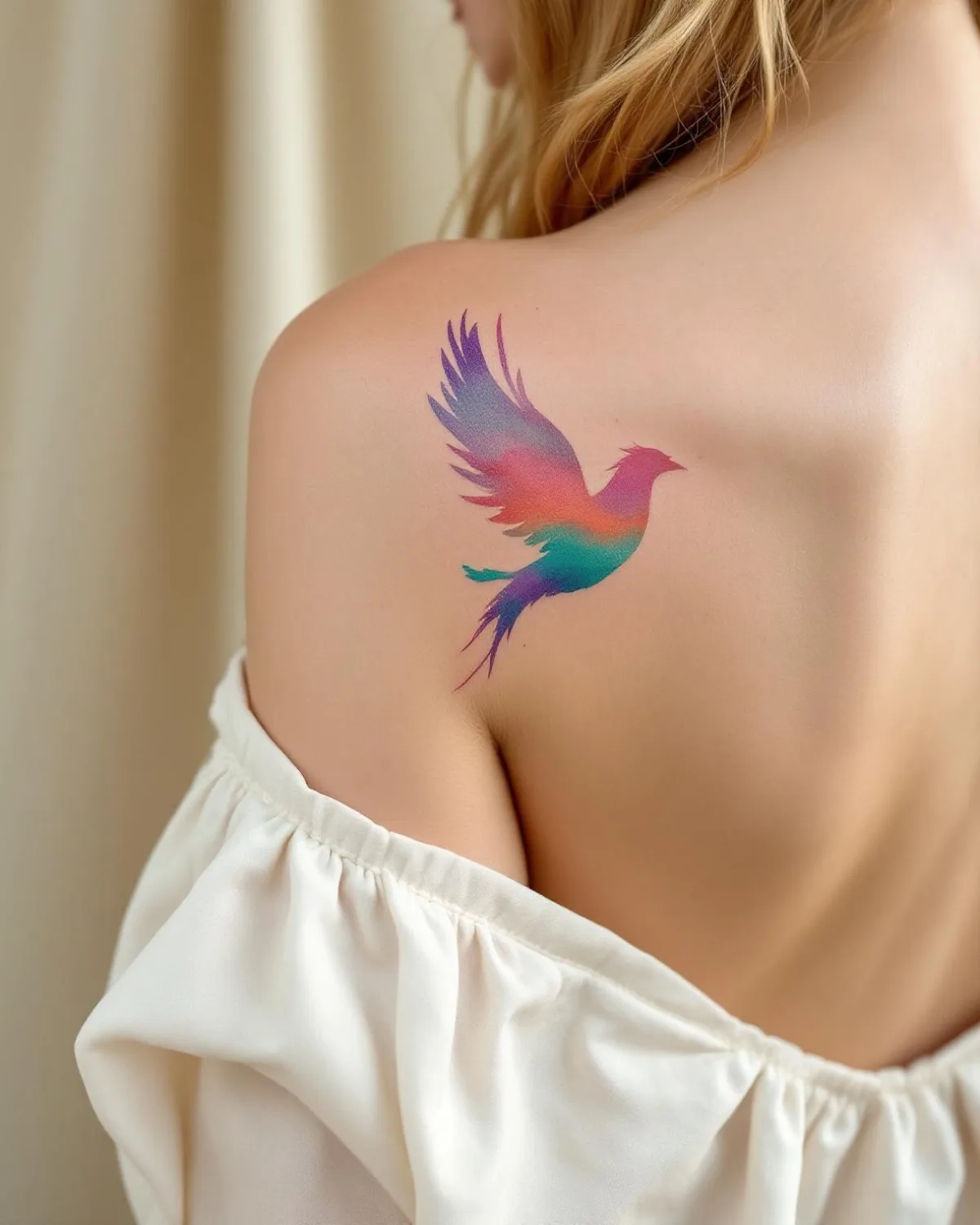
Watercolor tattoos abandon the outline entirely. The technique uses flowing colors—blues, greens, yellows, pinks, purples—that blend and bleed into one another, mimicking watercolor pigment behavior on paper. White space is crucial; negative space becomes the design's foundation. Line work, if present, is minimal and often organic. The effect is ethereal and impressionistic—the subject is recognizable but soft, as if viewed through water. Technically, watercolor demands precision with flowing color and acceptance of slight unpredictability. Splashes and bleeding are features, not flaws. However, this unpredictability also means watercolor requires artists of genuine skill to control color placement and density.
Open Tattoo Genie. Type one of these.
Watercolor lotus flower with pink, purple, and blue bleed, minimal outline
Abstract watercolor splash: warm oranges and golds blending on the wrist
Watercolor bird in flight, soft colors, organic brushstroke effect
Geometric shape infused with watercolor gradient, blue-to-purple transition
Watercolor butterfly with delicate color bleeding and white space definition
Small watercolor wolf head with grey-blue tones and organic splashes
Real designs from the community
Quiet answers.
Does watercolor tattoo fade faster than traditional styles?
Watercolor uses the same pigments as other styles, so fade rates are similar. However, watercolor's pale, soft appearance can make fading more noticeable. Colors may shift after 5–10 years; expect subtle changes, not dramatic fading.
Can watercolor cover scars or old tattoos?
Potentially, but it's tricky. The lack of outline and defined color fields makes coverage difficult. Watercolor is best for fresh skin or as a cover-up on lighter designs. Discuss feasibility with your artist.
How do I choose a watercolor artist?
Look for portfolios with consistent color control, clear subject matter (despite the soft aesthetic), and evidence of color-holding power in healed pieces. Ask to see photos of healed watercolor work—fresh vs. aged.
Is watercolor good for small designs?
Yes. Small watercolor pieces are charming and delicate. The lack of outline makes them read as pure color and form. However, very tiny watercolor may blur into single-colored blobs over time.
Can I combine watercolor with other styles?
Absolutely. Watercolor pairs well with fine line, minimalist, or geometric elements. The soft, flowing nature of watercolor beautifully contrasts with precise line work.