Forearm
Visible, flat, forgiving. The artist's favorite canvas.
Pain
3/10 average
Healing
2weeks (typical)
Visibility
Visible in casual wear
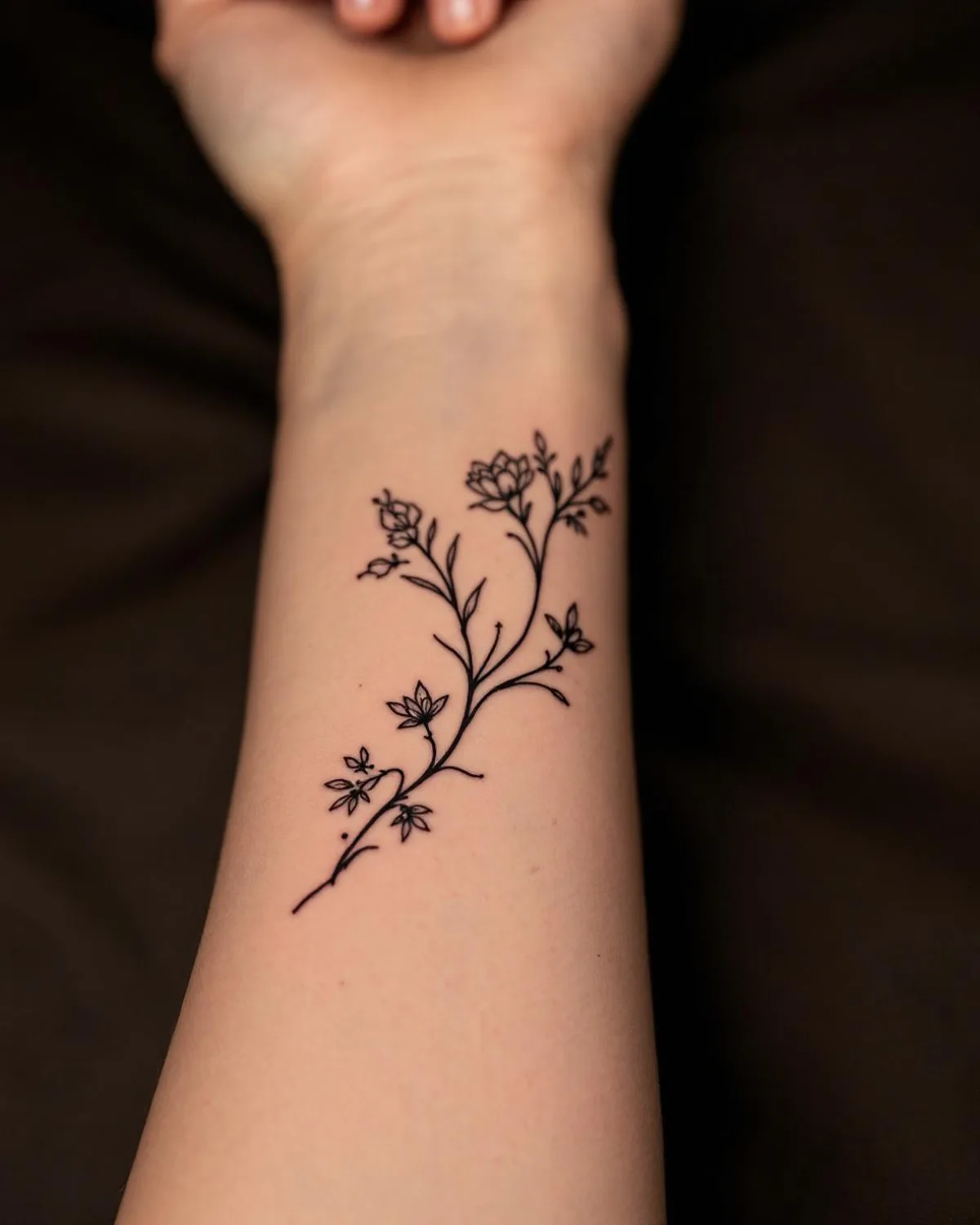
What sits beneath
The forearm is a relatively flat, stable surface with consistent skin thickness (1.5–2.0mm) and moderate subcutaneous fat padding. The radius and ulna run parallel beneath the skin, but they're deeper here than at the wrist. The forearm contains the extensor and flexor muscle groups, separated by the interosseous membrane. Superficial nerves (the radial, ulnar, and median nerves) run longitudinally but are less densely clustered than at the wrist. The outer forearm (extensor side) has looser skin and more forgiving tissue than the inner forearm (flexor side).
What to expect
3/10
Low-to-moderate. The forearm is one of the most forgiving placements because of its flat surface, consistent tissue, and less nerve density than the wrist. Most clients describe it as a steady vibration with minimal sharp pain. The outer forearm is noticeably easier than the inner.
2w
The forearm heals quickly because movement is moderate and friction is minimal when kept clean. Clothing typically doesn't press directly on the forearm except for tight sleeves. The main risk is sunburn during early healing—UV exposure fades fresh ink. Keep sleeves loose for the first week.
Visible in casual wear
Forearm tattoos are exposed with short sleeves, t-shirts, and rolled cuffs—easily visible in casual settings. Some professional environments permit visible forearm tattoos; others may expect sleeve coverage. A long sleeve can conceal it when needed.
Specific to this placement
Keep sleeves loose and breathable for the first 2 weeks—tight fabric pulls on the healing skin and irritates scabs. Sunscreen is critical; the forearm is frequently exposed to UV light. Avoid swimming and soaking for at least the first week. Hand-washing is fine, but avoid scrubbing the tattoo area directly. After healing, moisturize regularly to keep the design crisp.
This is general guidance. Follow your tattoo artist's specific instructions.
Quiet answers.
Is the forearm a good placement for a first tattoo?
Absolutely. The forearm is flat, the pain is manageable, and healing is straightforward. It's visible enough to enjoy daily, but can be covered with a sleeve if needed. Many artists recommend starting here.
How visible is a forearm tattoo in professional settings?
Moderately to highly visible. If your workplace has a strict dress code, forearm tattoos may require sleeve coverage. Many modern offices and creative industries are more accepting. Check your workplace culture before committing.
Can I get a large sleeve on my forearm, or should it be small?
Both work. Small, focused designs (1–3 inches) suit the forearm beautifully. Half-sleeve and full-sleeve pieces also look great on the forearm. Discuss scale and placement with your artist beforehand.
Do forearm tattoos fade faster due to sun exposure?
The forearm is frequently exposed to the sun, so yes—UV protection is more important here than on covered areas. Use sunscreen (SPF 30+) on your tattoo for the first year, and maintain sunscreen use long-term to keep colors vibrant.
Is the inner or outer forearm better for tattoos?
The outer forearm (extensor side) is less sensitive and heals slightly faster. The inner forearm (flexor side) is more sensitive but works well for certain designs, especially if you want a more hidden, personal piece. Both are viable.