1990s — present
Neo-traditional emerged in the 1990s as a direct evolution of American traditional tattoo, preserving the bold outline but expanding the color palette and adding dimensional shading. Artists like Marcus Kuhn, Nikko Hurtado, and Jime Litwalk brought fine art principles—color theory, perspective, dimension—into a tattoo language that felt familiar but ambitious. The style honors tradition while refusing to be confined by it; it's traditional tattoo for artists trained in oil painting. Neo-traditional found its global audience through the digital age and remains the bridge between classic flash and contemporary realism.
Bold outlines, painterly color, art-nouveau influence
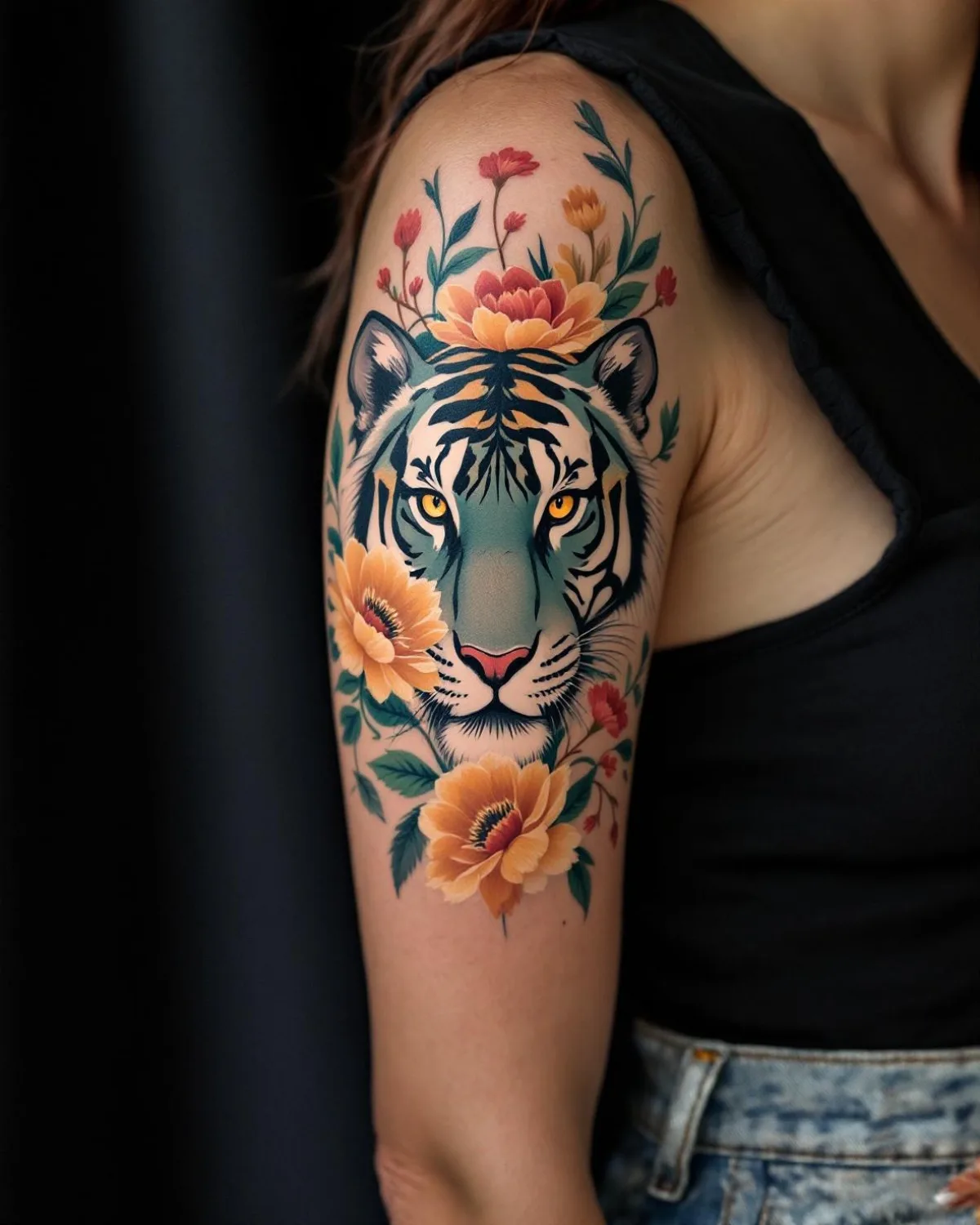
Neo-traditional combines thick, deliberate outlines (2–3mm) with a much broader color palette than traditional tattoo. The technique uses layered shading and color blending to create dimension—objects appear to sit forward on the skin. Line weight remains heavier than realism but lighter than pure traditional. The painterly quality comes from subtle color transitions and atmospheric perspective. Designs often feel sculptural, with light sources and shadow planes that give them volume.
Open Tattoo Genie. Type one of these.
A rose with dimensional shading and green leaves, neo-traditional style, upper arm
Colorful cardinal bird with soft feather detail and painterly shading
Portait-style rose with warm orange and red tones, neo-traditional
Dimensional phoenix rising with rich orange, gold, and red gradient
A vintage key with warm brass tones and dimensional shadows
Neo-traditional butterfly with intricate wing detail and color depth
Real designs from the community
Quiet answers.
How does neo-traditional age compared to traditional?
Neo-traditional ages beautifully because the color palette and shading give it visual depth even as lines soften slightly. The dimensional quality helps it stay interesting for decades. Like all color work, sun protection is crucial—fading happens gradually over 10–15 years with care.
Is neo-traditional more expensive than traditional?
Usually yes, because it requires more artistic skill, longer session times, and more careful color application. The added dimension and painterly shading justify the higher cost. Ask your artist for pricing before committing.
Can I mix neo-traditional with other styles?
Absolutely. Many artists blend neo-traditional with realism, fine line, or geometric elements. The bold outline and dimensional shading of neo-traditional can anchor more experimental designs.
What placements showcase neo-traditional best?
Larger canvases—upper arm, forearm, chest, back, full sleeves. Neo-traditional benefits from room to breathe and show detail. Small designs lose some of the dimensional impact.
How do I choose between traditional and neo-traditional?
Choose traditional if you want bold, timeless, high-contrast work with a limited palette. Choose neo-traditional if you want more color, depth, and an artistic, painterly quality. Consider your artist's strength in each style.