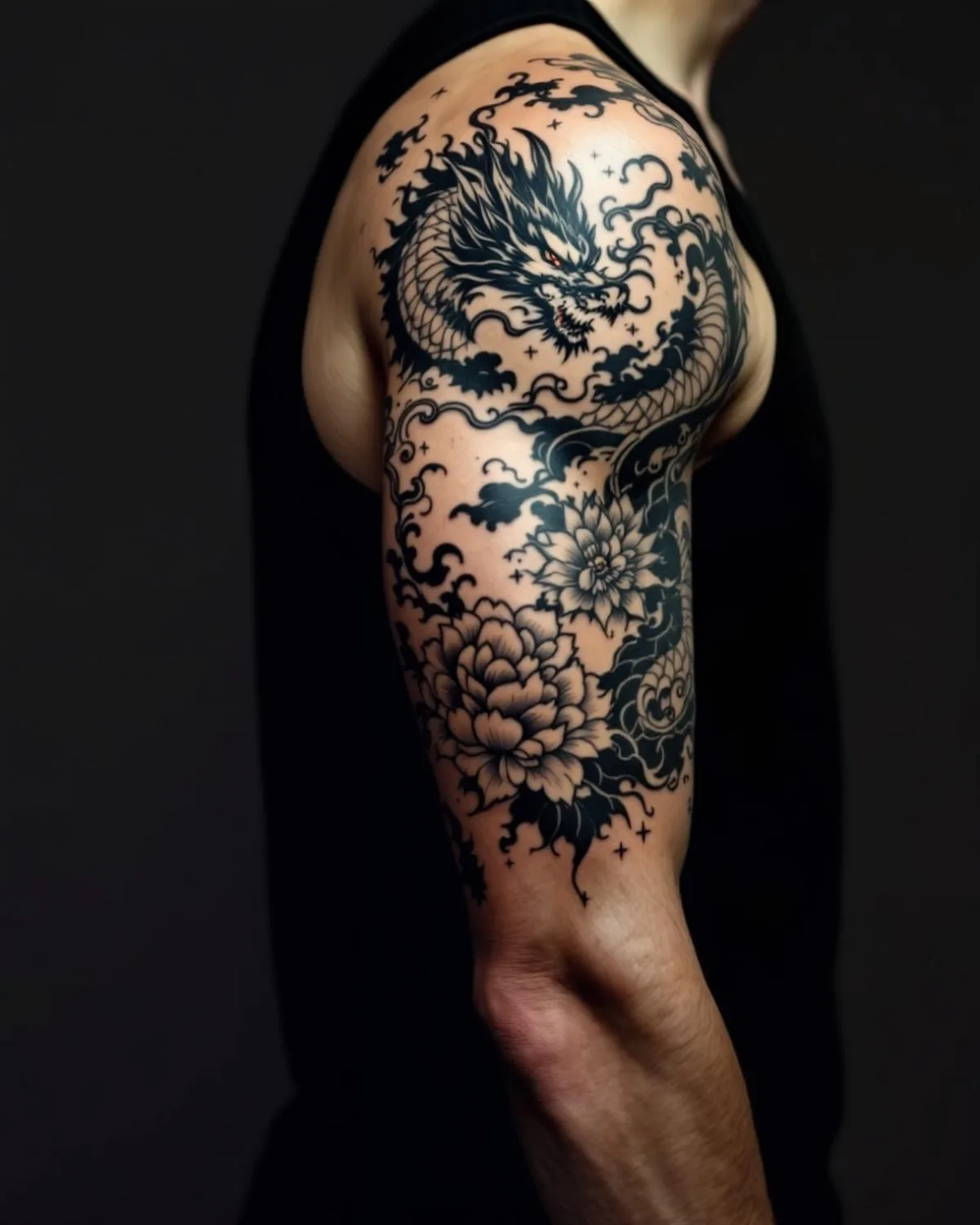
Full Sleeve
A commitment. An extended canvas. A life project.
Pain
5/10 average
Healing
5weeks (typical)
Visibility
Always on display
What sits beneath
A full sleeve wraps around the entire arm from shoulder to wrist, encompassing diverse anatomical zones. The shoulder and upper arm have thicker skin (2.0–2.5mm) and generous subcutaneous fat, making them relatively forgiving. The forearm transitions to thinner skin (1.5–2.0mm). The wrist, at the sleeve's terminus, involves thin skin (1.2–1.5mm), tendon and nerve density. The elbow presents a unique challenge: the skin is thin, loose, and frequently moves; the olecranon (elbow bone) sits close to the surface. Veins cross the antecubital fossa (inner elbow), adding visibility and sensation. A full sleeve includes this anatomical variety, meaning pain and healing vary by zone.
What to expect
5/10
Mixed. The shoulder and upper arm are relatively comfortable (pain level 3–4). The forearm is moderate (3–4). The elbow and inner wrist are significantly more painful (7–8). A full sleeve involves multiple sessions over months or years, so you experience the full range of pain at different zones. Total session time accumulates, which can be mentally and physically taxing.
5w
Full sleeve healing is extended because of size and multiple overlapping sessions. If completed in separate sessions (typical), each zone heals on its 2–3 week timeline, but the cumulative stress on the arm extends overall recovery. Clothing friction is a major factor—sleeves press on healing zones, especially around the elbow and upper arm. Movement and flexing continuously irritate scabs. Sleep becomes a factor if you rest on your tattooed arm.
Always on display
A full sleeve is always visible in casual settings (t-shirts, short sleeves, tank tops). Only long sleeves fully conceal it. Professional environments vary widely—some embrace full sleeves, others expect coverage. Corporate dress codes often require long sleeves if tattoos are present.
Where ink lands here best
Specific to this placement
A full sleeve requires careful garment management across months of healing. Wear loose, breathable long sleeves or go sleeveless indoors where possible—pressure from tight clothing reopens scabs. Avoid sleeping on your tattooed arm for at least the first week of each session. Sunscreen is essential for the first year, especially if wearing sleeveless. Take breaks between sessions (4–8 weeks minimum) to allow each zone to fully heal before adding more work. Moisturize consistently across the entire sleeve to keep colors vibrant and skin supple.
This is general guidance. Follow your tattoo artist's specific instructions.
Quiet answers.
How long does a full sleeve take to complete?
Depending on design complexity and artist availability, 6–18 months is typical. Some artists dedicate 3–5 sessions (3–4 hours each) to a sleeve. If you space sessions 6–8 weeks apart, you're looking at a year-long project. Discuss a timeline with your artist upfront.
Can I get a full sleeve all at once, or should it be done in sessions?
Full sleeves are always done in multiple sessions—the arm cannot safely tolerate 15+ hours in one go. Sessions are typically spaced 6–12 weeks apart to allow healing. This also lets you adjust the design as it progresses.
How painful is a full sleeve compared to individual pieces?
Each session feels like a standalone tattoo, but the cumulative physical and emotional toll of months of sessions is real. Pain tolerance is secondary to mental stamina—the commitment to multiple sessions is what challenges most people.
Do full sleeves limit my career or professional opportunities?
Yes, in some fields. Conservative industries (law, finance, corporate) may expect long sleeves if visible tattoos are present. Tech, creative, and service industries are generally more accepting. Consider your industry before committing to full visibility.
How well do full sleeves age over 20+ years?
Full sleeves age gracefully if the artist respects line weight, color saturation, and negative space. Because sleeves include multiple styles and scales, aging is mixed—some elements fade while others stay bold. Sunscreen and moisturizing over decades keep sleeves vibrant.