Giger-influenced 1980s
Biomechanical tattoo is a direct descendant of H.R. Giger's surreal, mechanical aesthetic, popularized in the 1979 film Alien. In tattooing, the style emerged in the 1980s as artists began visualizing the body as a hybrid of flesh and machine. Early pioneers explored the "skin-lift" concept—tattoos that appear to reveal internal gears, wires, and hydraulics beneath the skin. The style gained momentum in the 1990s and 2000s through science fiction fandom and the rise of body modification culture. Biomechanical tattoo reached peak popularity in the 2010s with refined techniques allowing photorealistic rendering of mechanical details. Today, biomechanical is a sophisticated, technically demanding style that blends anatomical knowledge with mechanical engineering aesthetics. It appeals to those fascinated by the boundary between organic and synthetic, nature and technology.
Internal mechanics, muscle-as-machine, skin lift
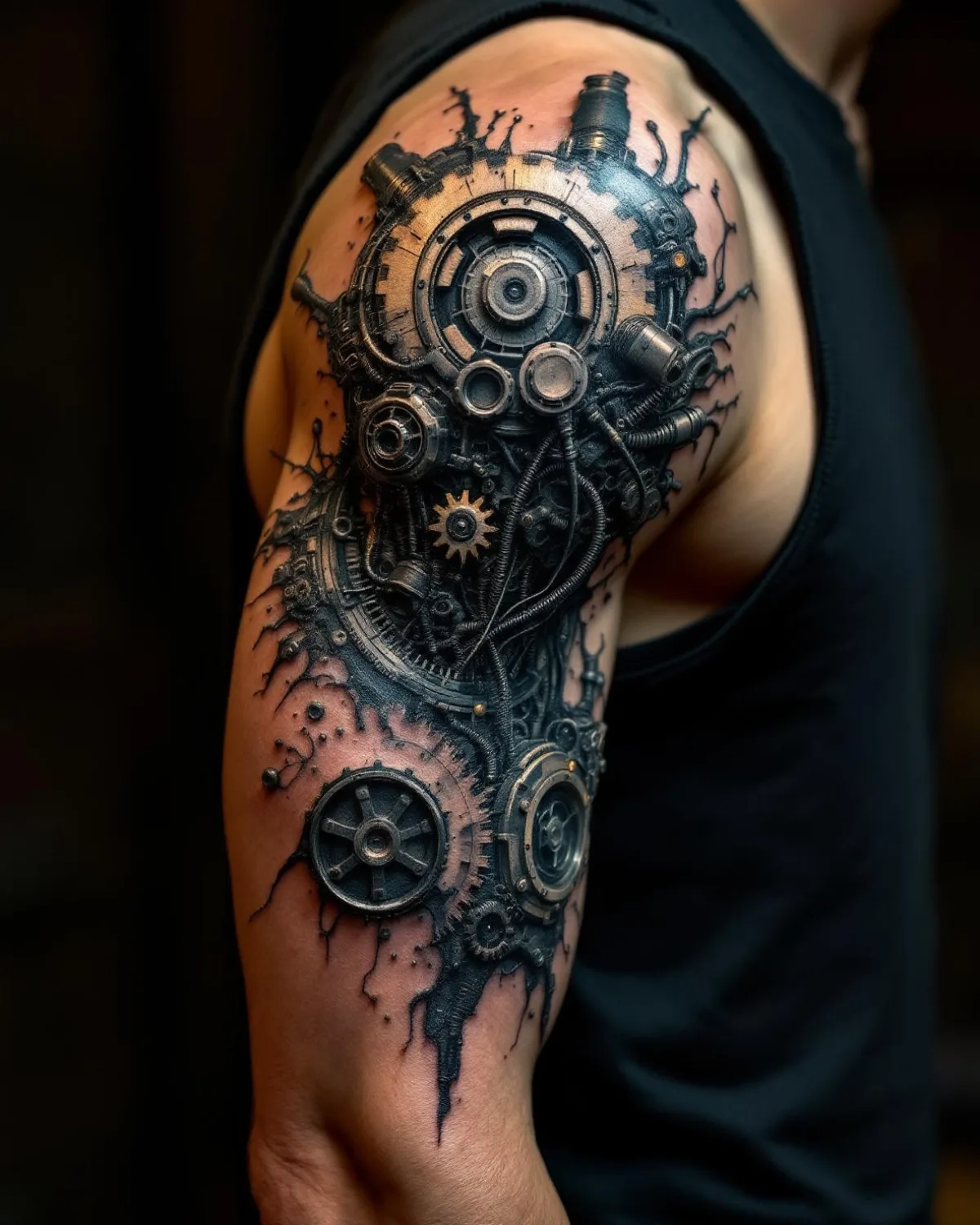
Biomechanical designs reveal internal mechanisms as if the skin has been peeled back to expose gears, pistons, hydraulics, circuits, and wiring. The effect combines anatomical accuracy (bone structure, muscle tone, realistic proportions) with mechanical detail (metal texture, bolts, rivets, glowing elements). Line work is often fine and precise; shading is photorealistic. Color can be absent (black and gray) or include metallic tones (silver, copper, electric blue). The composition follows body contours, creating the illusion that the "machinery" extends beneath the skin along anatomical pathways. Biomechanical work is labour-intensive and requires artists trained in both anatomy and technical rendering.
Open Tattoo Genie. Type one of these.
Biomechanical arm: skin peeled back revealing gears and hydraulics beneath
Mechanical shoulder piece with organic muscle blending into metal pistons
Biomechanical chest design: glowing circuits and metallic elements beneath skin
Robotic eye or skull emerging through realistic skin with mechanical detail
Biomechanical leg with exposed tubing, gears, and structural elements
Abstract biomechanical pattern: flowing mechanical and organic hybrid forms
Real designs from the community
Quiet answers.
Is biomechanical tattoo a lot of sessions?
Yes. The photorealistic detail, complex shading, and mechanical precision mean biomechanical pieces typically take 20+ sessions, often spanning 1–2 years. This is a long-term commitment.
How much does biomechanical cost?
Biomechanical is expensive because it requires highly skilled artists, many sessions, and meticulous work. Expect $150–300+ per session, multiplied over dozens of sessions. Large pieces can cost $3,000–$10,000+.
Can I get a small biomechanical piece?
Small biomechanical work exists but is less satisfying than larger pieces. The detail-richness of the style shines on larger canvases. Consider a 4–6 inch piece as a minimum for true biomechanical impact.
How realistic should my biomechanical design be?
The more detail, the better. Photorealistic rendering is standard. Reference real engineering (gears, circuits, industrial design) to ensure your design feels authentic and visually coherent.
Will my biomechanical tattoo look dated as styles evolve?
Biomechanical is rooted in timeless sci-fi aesthetics (Giger, sci-fi classics). Well-executed biomechanical work maintains appeal across decades. The blend of anatomical realism and mechanical fantasy creates enduring visual interest.