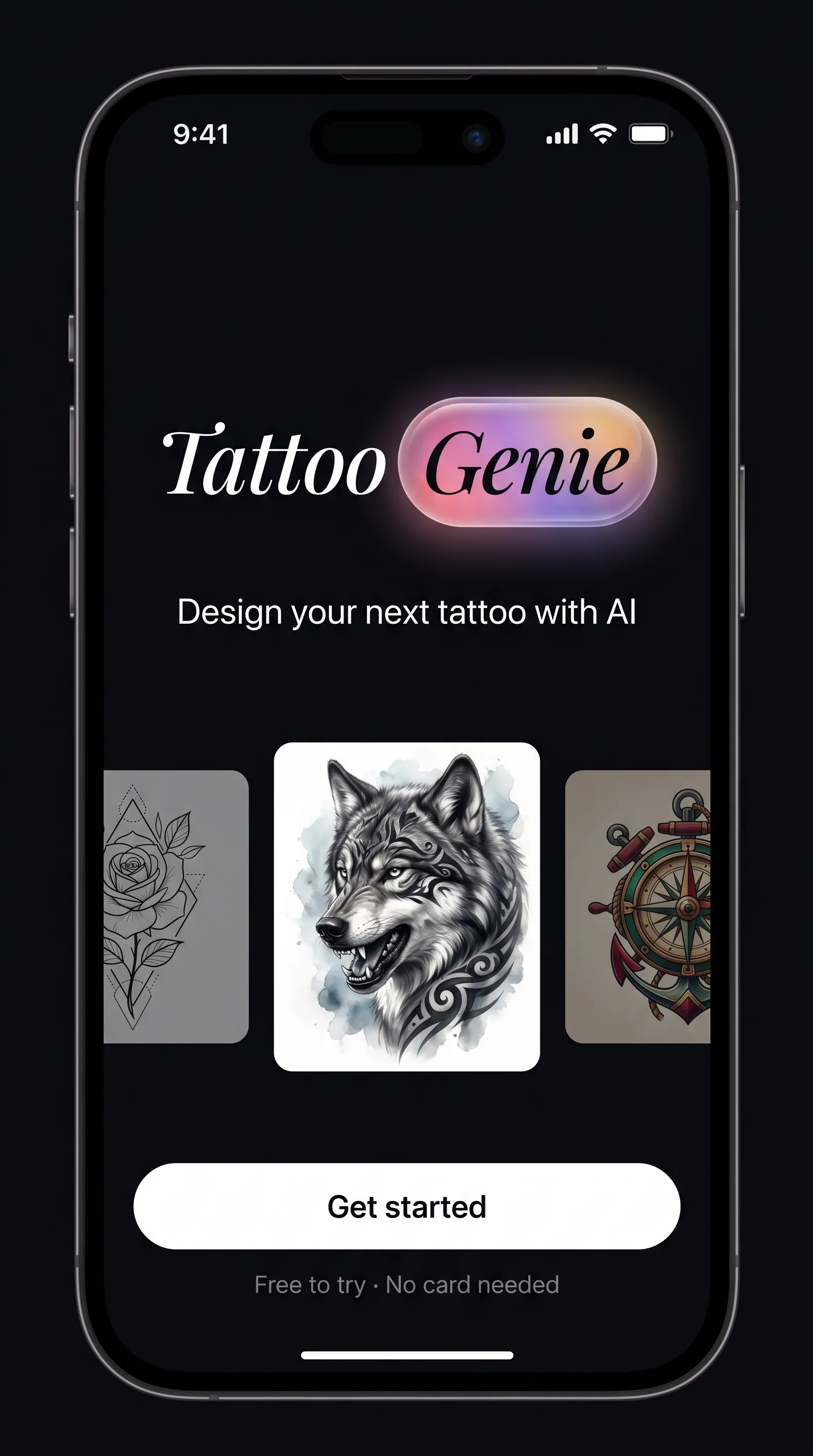
Wolf
Loyalty that hunts in pairs.
What it carries
The wolf is the animal that survives by belonging — it hunts in packs, raises its young collectively, and dies for the order of the group. To wear a wolf is to declare yourself pack-loyal, not a solitary predator. Wolves mate for life; they howl to keep the family together across distance. The wolf knows that strength is not individual muscle but the unity of teeth, eyes, and purpose turned toward one prey. In modern tattoo culture, the wolf has shed its villainous fairy-tale skin and become a symbol of fierce belonging and primal family bonds.
How it has been read
Norse mythology
In Norse tradition, the wolf is sacred and fearsome. Fenrir, the giant wolf bound at the world's root, represents chaos restrained by oath. Odin's two ravens (Huginn and Muninn) are often paired with wolves — the god of war surrounds himself with wild hunters. The berserkers, Odin's elite warriors, took the wolf as their animal spirit. To Norse eyes, the wolf is power itself — untamed but bound by honor.
Native American (Plains tribes)
In Plains tradition, the wolf is a pathfinder and teacher — it scouts for danger and calls the herd to safety. The wolf's medicine is about intuition, loyalty to the tribe, and the strength that comes from running with your people. A wolf tattoo in this tradition honors the animal's role as keeper of territory and guardian of the vulnerable.
Celtic tradition
Celtic lore casts the wolf as a shapeshifter and a guide to the Otherworld. In Irish mythology, wolves often accompany gods and act as messengers between the visible and invisible realms. To Celtic tattoo tradition, the wolf is the threshold guardian — the animal that knows both sides of the veil.
How it lives in ink today
Today the wolf is one of the most-tattooed wild animals — favored in blackwork, neo-traditional, and realism styles. A single wolf head on the forearm or chest, a full-moon wolf on the back, a detailed pack running across the shoulder, or geometric wolves in fine-line dotwork — each carries the same core message: you belong to something larger. Modern wearers often choose the wolf for family loyalty, overcoming solitude, or marking a transition into a tribe (chosen or biological).
Common treatments
A solitary wolf howling at the moon is introspection paired with belonging — an individual cry within the larger chorus. A wolf head in profile emphasizes the hunter's fierce focus. A full pack running together stresses collective strength. A wounded or limping wolf marks survival through hardship. Wolves with human eyes or half-human faces signal transformation or shapeshifting. Geometric or abstract wolves in dotwork suit minimalist wearers. A wolf with a crown or antlers signals leadership within the pack.
Where the line carries best
Styles that suit it
Where it lands well
Quiet answers.
Does a wolf tattoo mean I'm a "lone wolf"?
No — quite the opposite. Wolves are pack animals. A wolf tattoo typically means loyalty to your chosen family or tribe, not solitude. If you want to mark independence, look toward the fox or eagle instead.
What's the difference between a wolf and a dog tattoo?
Symbolically, the wolf is wild, untamed, and collective; the dog is tamed, loyal to an individual master, and domestic. Both carry loyalty, but the wolf claims it as a free choice within a pack; the dog offers it as obedience.
Is a wolf tattoo offensive to Native American people?
Not inherently, but the wolf's meaning in indigenous traditions is specific and sacred. If you're not from those traditions, honor that by learning the real meanings and choosing respectfully — avoid stereotypical or diluted versions.
Can I get a small wolf tattoo?
Yes — a wolf head works well at 2–3 inches on the wrist or behind the ear. Fine-line wolves are elegant at smaller sizes. Larger packs or full-body compositions suit the back or chest.