A tattoo you loved five years ago might not be the tattoo you want to wear today. The good news: a regret is not permanent. A cover-up is one of the most satisfying rewrites in tattoo work — a second chance that is tactically cleaner than removal and emotionally cleaner than living with something that no longer fits. This guide walks you through what makes a tattoo coverable, the design strategies that actually work, and how to use AI tools to visualize a cover-up before you sit in the chair.
What actually makes a tattoo coverable
Not every old tattoo is a good canvas for a cover-up. The viability hinges on four factors: size, ink density, age, and color. A small, fine-line, faded tattoo on a fifteen-year-old arm is nearly invisible to an experienced cover-up artist. A large, dark, bold piece from two years ago is harder — but still possible. The rule of thumb: if your original tattoo is small relative to your skin real estate, has light-to-medium density, and is at least five years old, a cover-up will feel effortless. Everything else requires strategy.
Ink age matters because tattoos fade over time. The older the piece, the less aggressive the cover-up design needs to be. Conversely, a fresh dark tattoo demands a cover-up that either goes significantly darker or significantly larger — or both. Many artists will recommend waiting a year or two before committing to a cover-up on a recent piece. That gives the ink time to soften and settle, and gives you emotional time to be certain.
Color is the third dimension. Black ink is easy to cover. Navy, burgundy, and dark greens can be covered with dark new designs. Bright reds, yellows, and light blues are notoriously resistant — they show through even darker inks. If your old tattoo is in a bright color, your cover-up artist might recommend a laser fade session first to lighten it, then a cover-up pass after healing.
The cover-up rule: go darker and strategic
The cardinal rule of cover-ups is simple: you cannot lighten over dark. You can only go darker or larger. This means a cover-up design is almost always darker than the original tattoo, and often significantly darker. That constraint is actually liberating — it forces you toward aesthetic categories that thrive in dark ink: blackwork, neo-traditional, ornamental, and certain styles of irezumi.
Shape strategy is the second lever. Organic shapes — florals, botanicals, abstract landscapes — hide geometric edges beautifully. A circle will not hide a rectangle. But a mandala with intricate botanical detailing will swallow a rectangle whole. If your old tattoo has hard edges or an awkward silhouette, choose a new design that is structurally generous — lots of flowing lines, asymmetrical balance, or radial symmetry that does not care where the old ink sits.
The best cover-ups feel like design upgrades, not panic repairs. That happens when the new design is compelling enough on its own that the viewer sees the new tattoo first and never notices the old ink underneath. Choose something you genuinely want to wear, not something you are merely hiding behind.
The best cover-ups feel like design upgrades, not panic repairs.
Botanical and blackwork: the cover-up workhorses
Botanical and floral designs have earned their reputation as cover-up specialists for good reason. They are forgiving, visually dense, and structurally flexible. A rose, a lotus, or a wildflower arrangement can be scaled up or down, reoriented, layered with leaves and stems, and still read as intentional. The flowing curves of stems and petals hide old tattoo edges naturally, and the negative space between leaves can absorb awkward original ink without breaking the composition.
Blackwork shares that same dark-ink advantage and adds geometric precision. A mandala, a sacred geometry pattern, or a geometric animal head in solid blackwork creates visual weight that dominates the space. Old ink inside a blackwork frame simply becomes part of the shadow and depth. Blackwork also ages beautifully — the solidity reads as intentional even as it softens over decades, whereas lighter cover-ups can fade into an ambiguous middle ground.
If you are unsure which direction to go, start by exploring cover-up designs within these two styles. Show your artist your old tattoo, ask them to sketch a few botanical or blackwork options, and see which one feels like an upgrade rather than an escape. That feeling is usually right.
Using AI to preview a cover-up design
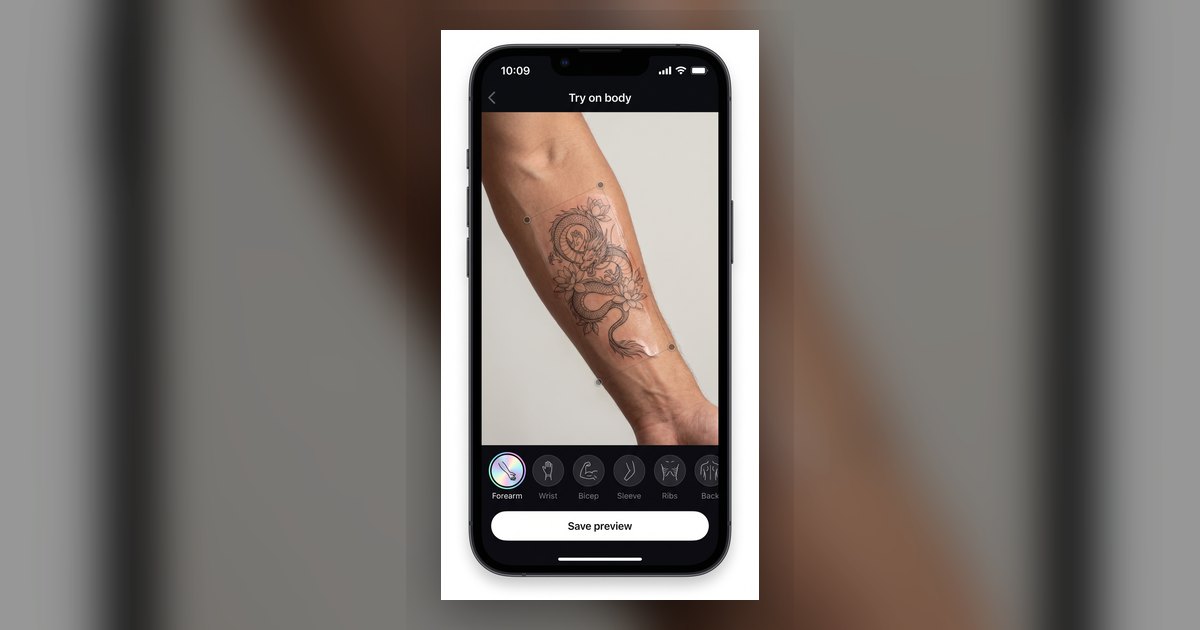
This is where modern tools change the game. Instead of relying entirely on an artist's sketch or your imagination, you can upload a photo of your existing tattoo and ask an AI tool to generate a cover-up design overlay. Upload an image of your forearm with the old tattoo visible, specify the style (botanical, blackwork, neo-traditional), and in seconds you have a visualization of what a cover-up in that style could look like on your actual body.
The visualization does three things well. First, it shows you how the new design will sit relative to the old ink — which edges it will hide, which parts will overlap. Second, it lets you try multiple design directions (a mandala, a wolf, a botanical sleeve) without committing to sketches or consultations. Third, and most importantly, it gives you emotional ground truth before you walk into the chair. You will know whether you actually like the cover-up direction, or whether you need to pivot.
Use the AI output as a conversation starter with your cover-up artist. Bring the visualization, talk through what worked and what did not, and let them refine it into something that is both doable and aligned with how the ink will actually behave on your skin. The AI preview saves you from committing to a sketch you are not sure about.
When laser fade is the right answer
Not every cover-up works on the first pass. If your old tattoo is very large, very dark, or in a bright color that resists ink, a cover-up artist might recommend a laser fade session before tattooing over it. Laser does not erase tattoos — it breaks down the ink particles so they fade. A single session can lighten a tattoo by thirty to fifty percent. Multiple sessions, spaced weeks or months apart, can fade it significantly more.
The honest calculus: laser is slower and more expensive than a direct cover-up, but it gives you options. A faded tattoo is easier to cover, leaving room for lighter new designs or smaller cover-up footprints. If your old tattoo is a barrier to the cover-up design you actually want, a round or two of laser can remove that barrier. Budget for six to twelve weeks of healing between laser and the cover-up tattoo.
Ask your cover-up artist for their recommendation. They have seen hundreds of old pieces and know which ones are cover-able as-is and which ones benefit from a laser warm-up. Trust their judgment — they are trading on their reputation for the quality of the final result.
The emotional permission slip
Here is something nobody tells you about cover-ups: the real work happens before the needle. It is the permission you give yourself to move on. A regretted tattoo can sit on your skin like a small, ongoing failure — a constant reminder of a choice you would undo if you could. A cover-up says "I loved this once, but I do not love it anymore, and that is okay." It is the tattoo equivalent of outgrowing a friend.
Use the months before your cover-up appointment to think about what you actually want your skin to say. Not what you are running from, but what you are running toward. The best cover-ups are not escapes — they are affirmations. An old wolf becomes a lotus. An old symbol becomes a portrait. The canvas does not erase; it grows.
By the time you sit in the chair for your cover-up, you should feel certain. The design should feel like an upgrade. The commitment should feel relieving, not anxious. If you are still unsure, take more time. There is no deadline for owning your next tattoo.
A cover-up is not a coverup — it is a rewrite. The best ones transform regret into something you wear with intention. Start by assessing what makes your old tattoo coverable, explore designs in styles that thrive in dark ink, use AI tools to preview the transformation, and trust your artist with the execution. And remember: you do not have to like the same tattoo forever. Your skin can grow with you.